What Makes an Automatic Cat Feeder Genuinely Reliable?
The market for automatic cat feeders has expanded dramatically. There are now hundreds of models across every price range, promising everything from basic timed dispensing to AI-powered portion optimization. Most of them are neither as reliable as their marketing suggests nor as durable as their price might imply. Finding one that actually does the job consistently, day after day, is the real challenge.
Reliability in a cat feeder means one specific thing: the correct amount of food is dispensed at the correct time, every time, without jamming, malfunctioning, or requiring troubleshooting. That sounds like a low bar. In practice, a meaningful number of models in the budget and mid-range categories fail to clear it consistently under real-world conditions. Cat owners who discover this failure usually discover it the hard way, returning home to a cat that hasn't been fed because the feeder jammed while they were at work.
What Are the Most Common Failure Points in Automatic Cat Feeders?
Jamming is the most frequent functional failure. Kibble is hygroscopic, meaning it absorbs moisture from the air, and when it does, individual pieces can swell slightly and bond together. A dispensing mechanism with a tight pathway or a chute diameter that barely accommodates the kibble size jams easily under these conditions. The failure typically goes unnoticed until the next scheduled meal doesn't arrive.
Portion inconsistency is the second most common complaint in reviews of lower-quality feeders. A feeder that dispenses plus or minus thirty percent of the set amount isn't providing portion control. It's providing a general approximation. For cats where portion accuracy matters, whether for weight management, medical reasons, or simply because the owner is tracking food intake, this level of imprecision defeats the purpose of having a programmable feeder at all.
Automatic cat feeder options at TheMeowPicks are curated with exactly these failure modes in mind. The platform's technology selection exists because smart, genuinely reliable cat tech belongs in a well-designed feline environment. Every piece in the feeders category has been chosen because it actually works, not because it has the most features on the spec sheet.
How Does Connectivity Change What a Feeder Can Do?
A connected feeder, one with Wi-Fi and a companion smartphone app, changes the feeding relationship from set-and-forget to monitor-and-adjust. Instead of programming a schedule and hoping it runs correctly, an owner with a connected feeder can see when the last meal was dispensed, receive a notification if a scheduled meal wasn't delivered, adjust portion sizes or timing remotely, and in some models, see video of the cat eating.
This connectivity has practical value well beyond convenience. For cats on weight management programs, the ability to track actual food intake and adjust portions in response to weight check data makes the program meaningfully more precise. For owners who travel, the ability to verify that a scheduled meal was delivered provides real peace of mind rather than a vague hope that the mechanism worked correctly.
The tradeoff is dependency on network connectivity and a working app ecosystem. Features built on a cloud connection are only as reliable as the infrastructure supporting them, and app support for consumer smart devices can be discontinued when products are discontinued. This is worth factoring into buying decisions, particularly for products from very small or unproven brands.
What Capacity Do You Actually Need?
Capacity is the feature most new feeder buyers overestimate. A hopper that holds a month's worth of food sounds appealing in theory. In practice, dry kibble begins to lose freshness within two to three weeks of the bag being opened, and storing kibble in a feeder hopper rather than in a sealed bag accelerates that degradation. Buying a larger capacity than you need results in serving stale food at the end of each refill cycle.
For a single cat, a capacity of one to two liters typically holds enough food for one to two weeks of regular daily feeding. That's often the right amount: frequent enough refills to keep food fresh, infrequent enough that the refill routine isn't burdensome. Multi-cat households or owners who travel frequently genuinely benefit from larger hoppers, but in those cases, the food freshness question is worth addressing with airtight hopper designs that slow oxidation.
How Should You Think About Cleaning and Hygiene?
Dry food feeders accumulate oil residue from the kibble's fat content, fine dust from broken pieces, and occasionally moisture that creates conditions for bacterial growth. A feeder that isn't cleaned regularly becomes an unhygienic food source regardless of how well the mechanism functions otherwise.
The practicality of cleaning determines whether it actually happens. A feeder that requires significant disassembly, that has hard-to-reach corners with accumulated residue, or that uses materials that can't be properly sanitized simply won't get cleaned on the schedule it needs. Buy a feeder you'll actually clean. That means smooth interior surfaces, full disassembly into cleanable components, and materials that tolerate the temperatures and cleaning agents needed for proper sanitation.
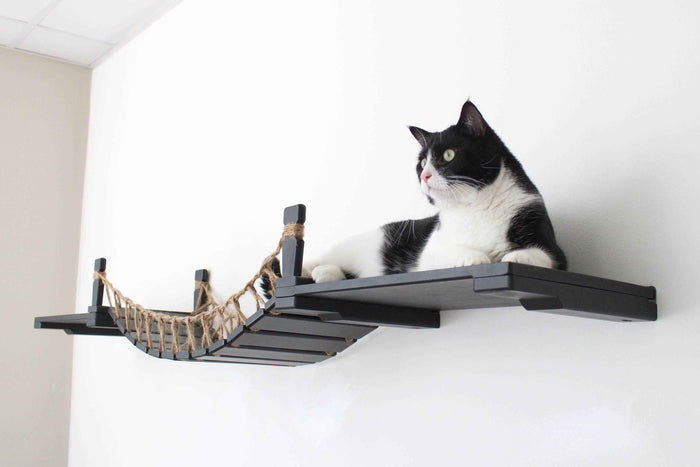
Cat tower pieces alongside a reliable feeder create the kind of complete daily care environment that TheMeowPicks curates its entire product selection around. The platform's thinking is simple: carry fewer things and carry the right ones. A cat whose feeding is handled reliably and whose environmental needs are met physically through quality climbing furniture and proper hydration is a genuinely well-cared-for animal.
Conclusion
An automatic cat feeder earns its place in a cat owner's home by being reliably correct every day, not by having the most features or the lowest price. Jam resistance, portion accuracy, ease of cleaning, appropriate capacity, and backup power are the practical features that determine real-world reliability. A feeder that delivers on those points is one of the most useful daily care tools available for indoor cats.
FAQ
Q: How often should an automatic cat feeder be cleaned?
A: A full clean every one to two weeks is appropriate for most single-cat households. The hopper, dispensing mechanism, and food bowl should all be cleaned separately at each session.
Q: Can automatic cat feeders be used with raw or wet food?
A: Standard automatic feeders are designed for dry kibble. Wet food feeders exist but have very limited holding time before food safety becomes a concern. For wet food, gravity feeders with ice compartments offer a limited solution.
Q: Do cats become dependent on the automatic feeder's sound cues?
A: Many cats learn to associate the feeder's dispensing sound with mealtime and will gather near the feeder as the scheduled time approaches. This is a normal and useful conditioned behavior rather than a dependency concern.